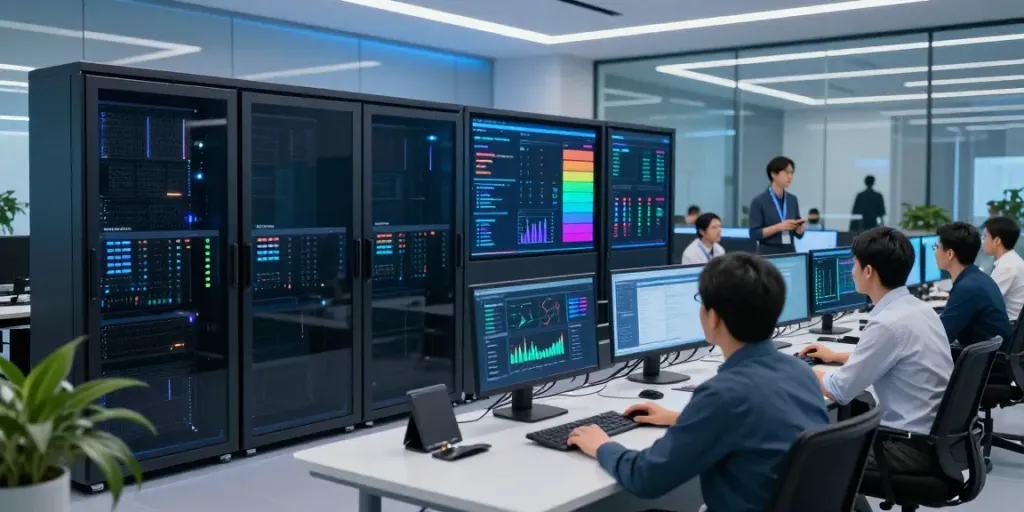
Understanding the AI Token Economy
The AI Token Economy represents a groundbreaking paradigm that encapsulates the operational and economic frameworks driving artificial intelligence systems. At its core, this economy is predicated on the utilization and distribution of tokens — unique units that facilitate the measurement of resource consumption and AI activity, much like how kilowatt-hours quantify electricity usage. As businesses and individuals seek to navigate this evolving landscape, understanding the intricate dynamics of how tokens function within AI systems becomes crucial for maximizing benefits and understanding potential rewards. When exploring options, AI Token Economy provides comprehensive insights into the infrastructure powering this economy.
What is the AI Token Economy?
The AI Token Economy refers to a unique economic model that assigns value to the computational resources consumed by AI systems. Tokens serve as a metric for tracking the performance and utility of AI applications, enabling users to gauge their contributions to AI operations. This economy functions across various layers, including data processing, machine learning models, and inference tasks, with tokens acting as the metric for resource allocation and consumption.
Key Components of AI Token Infrastructure
- Tokens: These are the basic units of value that represent the consumption of compute resources.
- Infrastructure: This includes the hardware and software that power AI systems, such as GPUs and data centers.
- AI Workloads: These are the tasks that AI models perform, which require processing power and, consequently, tokens.
- Power Plans: Customized electricity plans that support the energy requirements of AI operations.
Common Misconceptions About AI Tokens
One of the prevalent misconceptions is that AI tokens are cryptocurrencies. While AI tokens facilitate transactions within the AI ecosystem, they differ fundamentally from cryptocurrencies as they are not intended for speculative trading. Instead, they measure service usage and computing resources, ensuring that users are charged for the actual value they derive from AI operations.
The Role of Power Plans in AI Infrastructure
Power plans play a pivotal role in the AI Token Economy by ensuring that AI infrastructure has the necessary electricity to operate efficiently. These plans are designed to align energy consumption with AI workloads, providing flexibility and scalability for users. Choosing the right power plan can significantly impact the efficiency of AI operations and the value generated through token utilization.
How AI Infrastructure Power Plans Work
AI Infrastructure Power Plans outline the amount of electricity allocated to support specific AI workloads based on demand and performance metrics. Users select a plan according to their operational needs and anticipated token usage. The platform records electricity consumption, tracks AI workload performance, and calculates rewards based on the number of tokens processed during the billing cycle.
Choosing the Right Power Plan for Your Needs
Selecting the appropriate power plan involves evaluating various factors, including expected AI workload volume, desired participation period, and budget constraints. Users should consider plans that offer flexibility and scalability to adapt to changing demands, ensuring that they are always aligned with their operational goals.
Benefits of Participating in Power Plans
- Cost Efficiency: Optimizing power consumption can lead to significant cost savings.
- Scalability: Plans are designed to scale with the growth of AI workloads, accommodating increasing energy needs.
- Performance Measurement: Detailed reporting on energy usage and token performance helps users evaluate their contribution and ROI.
Calculating Contribution Rewards in the AI Token Economy
Understanding how contribution rewards are calculated is essential for participants in the AI Token Economy. This process involves tracking power contributions, measuring the performance of AI workloads, and determining rewards based on the efficiency of the underlying systems.
Understanding Contribution Metrics
Contribution metrics consist of various factors, including the amount of electricity utilized, the number of tokens processed, and the overall performance of AI operations. Participants need to actively monitor these metrics to optimize their contributions and maximize potential rewards.
Example Scenarios for Reward Calculation
Consider a scenario where a user opts for an enhanced power access plan. If their contributions support the processing of 10,000 tokens in a month, and the operational costs (electricity, maintenance) total $200, the platform will calculate the user's share based on their power contribution relative to the total energy consumed during that period.
Factors Influencing Reward Variability
Several factors can influence the variability of rewards, including fluctuations in electricity prices, changes in AI workload demands, and the efficiency of the infrastructure. Users should remain aware of these elements to forecast potential earnings accurately.
Scalability and Efficiency of AI Token Support
The scalability and efficiency of AI token support is vital for sustaining growth within the AI Token Economy. Effective strategies for power allocation and resource management can enhance operational efficiency and overall performance of AI infrastructures.
Strategies for Scalable Power Allocation
- Dynamically Adjusting Plans: Implementing systems that can automatically adjust power plans based on real-time workload demands.
- Utilizing Renewable Energy: Incorporating renewable energy sources to reduce costs and promote sustainability.
- Optimizing Infrastructure: Investing in advanced infrastructure management tools to monitor performance and allocate resources efficiently.
Enhancing Power Efficiency in AI Operations
To bolster power efficiency, organizations should focus on minimizing wastage and optimizing resource use during AI processing. Techniques include deploying energy-efficient hardware, improving cooling systems, and utilizing software solutions that enable better task management and resource distribution.
Evaluating AI Factory Performance Metrics
Regularly evaluating performance metrics is essential for understanding the efficacy of AI operations. Metrics such as token processing times, power utilization ratios, and overall system responsiveness can help identify areas for improvement.
Future Trends in the AI Token Economy
The AI Token Economy is continuously evolving, influenced by advancements in technology and shifts in market demands. Understanding future trends is crucial for stakeholders looking to remain competitive and leverage emerging opportunities.
Emerging Technologies Influencing AI Infrastructure
- Artificial General Intelligence: As AGI becomes more prevalent, the demand for scalable AI services will increase, impacting token value and allocation strategies.
- Quantum Computing: Quantum technologies may revolutionize AI processing capabilities, requiring new token economics frameworks.
- Blockchain Integration: Enhancements in blockchain technologies could offer increased transparency and security in AI token transactions.
Long-term Predictions for AI Token Value
Forecasting the long-term value of AI tokens involves analyzing market trends, technological advancements, and user adoption rates. As AI applications expand across industries, the demand for tokens may rise, leading to potential increases in their value.
Preparing for Changes in the AI Ecosystem
Stakeholders must remain agile and responsive to changes within the AI ecosystem. Continuous education and adaptation to new technologies will empower participants to navigate future challenges and seize new opportunities.
How Do AI Tokens Adapt to Market Shifts?
AI tokens are inherently designed to adapt to market shifts by providing a flexible unit of measure for resource allocation. As demand for AI services fluctuates, the underlying infrastructure can be reconfigured to accommodate these changes, ensuring that the economy remains resilient and responsive.