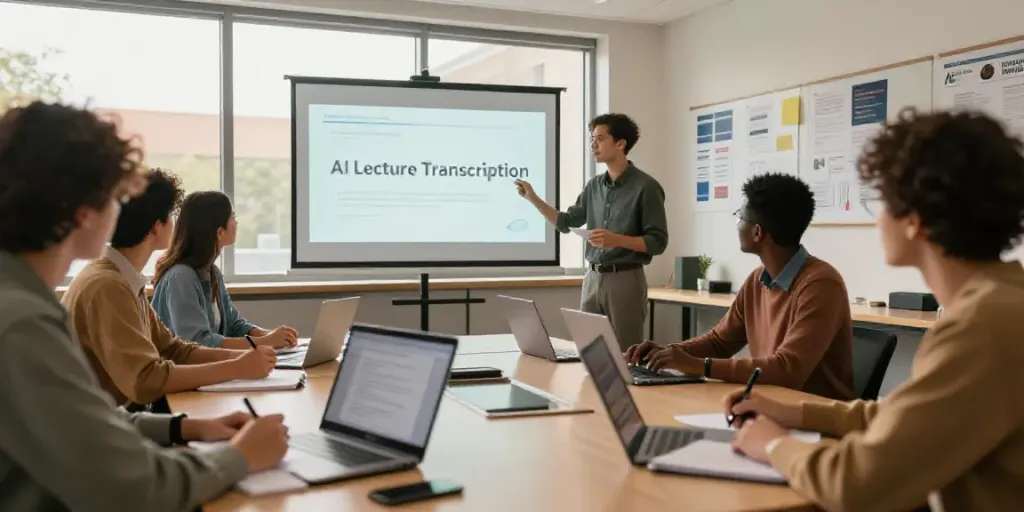
The Value of AI Lecture Transcription
In an increasingly digital world, the ability to accurately transcribe spoken content into text has become vital, particularly in educational settings. As students and educators alike seek to enhance their learning and teaching experiences, AI lecture transcription stands out as a transformative tool. By leveraging advanced algorithms and machine learning, these systems provide rapid and precise transcriptions of lectures, fostering better engagement and retention of information. When exploring options, AI lecture transcription technology can revolutionize the way knowledge is captured and disseminated.
Understanding AI Lecture Transcription Technology
AI lecture transcription utilizes sophisticated algorithms to convert spoken language into written text in real-time. These systems rely on natural language processing (NLP) and machine learning to understand various accents, vocal nuances, and contextual meanings, making them incredibly proficient in accurately capturing spoken content from lectures. As the technology evolves, incorporation of deep learning techniques is enhancing the ability of these tools to improve transcription quality by learning from vast amounts of data.
Benefits of AI in Academic Settings
Integrating AI transcription tools into educational environments presents numerous benefits:
- Enhanced Accessibility: Students with hearing impairments can access course material in real-time, leveling the playing field for all learners.
- Improved Focus: Students can concentrate on the lecture instead of furiously taking notes, allowing for deeper engagement with the material.
- Better Study Aids: Transcriptions can be converted into texts for easy reference, facilitating more effective review sessions during exam preparations.
- Time Efficiency: Both educators and students save time by having lecture content instantly available in a written format.
Cost Analysis and Accessibility for Students
The cost of adopting AI lecture transcription tools has significantly decreased, making them more accessible to educational institutions and individual students. Many platforms now offer free or low-cost versions, ensuring that budget constraints do not hinder students' access to advanced learning tools. This democratization of technology is crucial in bridging gaps in educational equity and providing all students with the resources they need to succeed.
How AI Transcription Works
The Process Behind AI Lecture Transcription
Utilizing a combination of voice recognition, NLP, and deep learning, AI transcription systems follow a systematic process to produce accurate text outputs. Initially, audio data is captured through microphones during a lecture or presentation. The system then processes this data, breaking it down into smaller components, analyzing phonemes, and converting sound patterns into text. Additionally, real-time feedback loops allow the system to learn and adapt, improving accuracy over time.
Accuracy and Limitations of AI Tools
While AI transcription tools are remarkably proficient, they are not infallible. The accuracy of transcriptions can be influenced by various factors, including audio quality, background noise, and speaker clarity. In environments where multiple speakers are present, or where technical jargon is common, the potential for inaccuracies increases. Therefore, it is essential for users to review transcriptions and make necessary corrections for critical applications.
Comparative Overview: AI Transcription vs. Manual Transcription
When evaluating AI transcription against traditional manual methods, key distinctions arise:
- Speed: AI tools can produce transcriptions in a fraction of the time it takes a human transcriber, often generating results in real-time.
- Cost: Automated systems eliminate the need for human labor, providing a more cost-effective solution for institutions.
- Scalability: AI systems can handle large volumes of audio data simultaneously, making them suitable for extensive lecture series or conference coverage.
- Precision: Depending on factors such as contextual understanding and the complexity of language used, manual transcription may still maintain a higher accuracy in niche subjects.
Choosing the Right AI Transcription Tool
Top AI Lecture Transcription Services in 2026
The landscape of AI transcription services is rapidly evolving, with several platforms leading the charge:
- Otter.ai: Known for its user-friendly interface, Otter provides excellent real-time transcriptions with collaborative features.
- Whisper Transcribe: This tool specializes in educational settings, offering reliable transcriptions tailored for students and educators.
- Smart Noter: A free option that captures lectures and generates flashcards and quizzes from notes.
- Genio: Offers a unique integration of lecture recording and transcription, enabling users to produce organized notes effortlessly.
Features to Look For in Transcription Software
When evaluating transcription tools, consider the following features:
- Real-Time Processing: The ability to transcribe audio as it’s being recorded ensures that no information is missed.
- Speaker Identification: Effective tools can distinguish between multiple speakers, providing clarity in group discussions.
- Integration Capabilities: Look for software that integrates with existing learning management systems, enhancing workflow.
- Customizable Outputs: Ability to adjust output formats and include timestamps or speaker labels.
User Reviews and Recommendations
User feedback plays a critical role in selecting the right tool. Platforms like Reddit often have discussions on the best transcription services based on user experiences. Evaluating reviews and participating in forums can provide insight into real-world applications and effectiveness.
Implementing AI Lecture Transcription in Education
Best Practices for Educators and Students
To maximize the benefits of AI transcription, both educators and students should adopt best practices:
- Preparation: Inform students about the use of transcription tools and ensure the audio recording environment is optimal.
- Review: After lectures, encourage students to review transcripts and highlight key points to reinforce learning.
- Feedback: Educators should seek feedback on the usability of transcription tools and adjust their teaching methods accordingly.
Integrating Transcription Tools into Learning Platforms
Seamless integration of AI transcription tools within learning management systems (LMS) can enhance accessibility and provide students with a comprehensive learning package. Ensuring that these tools align with existing curriculum delivery methods can optimize the educational process and provide a cohesive learning experience.
Case Studies: Successful Implementation Stories
Several institutions have successfully integrated AI lecture transcription, improving student retention and participation. For instance, a university in California implemented transcription tools across its STEM courses, leading to a noticeable increase in student performance and engagement. Such case studies illustrate the transformative power of AI technologies within educational frameworks.
Future Trends in Lecture Transcription Technology
Emerging Technologies Impacting AI Transcription
The evolution of AI transcription technology is set to continue, driven by advancements in machine learning and hardware capabilities. Innovations such as enhanced neural networks and cloud-based processing will likely improve accuracy, reduce processing time, and offer even more robust features tailored for diverse educational needs.
Predictions for AI in Education Beyond 2026
As AI integration in education deepens, the future may see fully automated learning environments where transcription and other AI-based tools collaborate to provide customized educational experiences tailored to individual student needs. This personalized approach could redefine the traditional educational landscape, making learning more engaging and effective.
Ethical Considerations in AI Transcription Use
With the rise of AI transcription come ethical considerations regarding privacy, data security, and usage rights. Institutions must navigate these concerns carefully, ensuring that student data remains confidential while leveraging AI technologies for educational enhancement.
Can AI Transcribers Improve Lecture Retention?
Numerous studies suggest that the availability of accurate transcriptions can significantly enhance lecture retention. By allowing students to focus on auditory learning during lectures, the subsequent review of transcribed materials aids memory consolidation, leading to better learning outcomes.
Are AI Transcribers Legal?
Generally, AI transcribers are legal; however, issues surrounding intellectual property and consent for audio recording must be considered. Educators should inform students when audio is being recorded and obtain consent when necessary to ensure compliance with relevant laws.
Will Transcriptionists Be Replaced by AI?
While AI transcription tools are revolutionizing the speed and accuracy of the transcription process, it is unlikely that human transcriptionists will be entirely replaced. Rather, these systems will serve to augment human capabilities, allowing transcriptionists to focus on more complex tasks that require nuanced understanding and contextual interpretations.